
Cost of Rapid Prototyping in 2026: Price Guide
Rapid prototyping

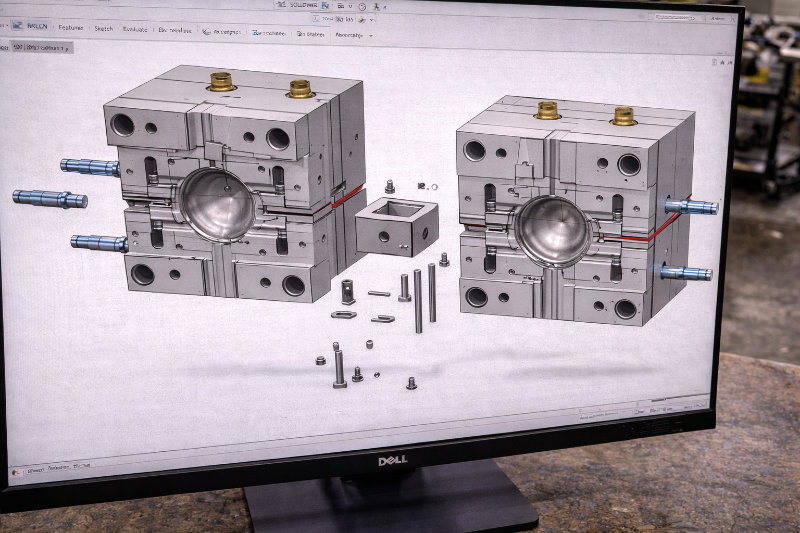
Mold design typically costs between $500 and $5,000, depending on part complexity, number of cavities, file quality, and material choice. Simple single-cavity designs with clean CAD files and proper draft angles sit at the low end. Complex multi-cavity tools with tight tolerances, undercuts, or with no or poor quality CAD files push costs toward the the higher range. Choosing aluminum, 3D-printed or vacuum cast molds for low-volume runs can reduce upfront design costs significantly. The single biggest factor in keeping mold design affordable is submitting a DFM-ready CAD file – parts that have been designed for moldability from the start need less rework, fewer design revisions, and shorter lead times.
If you’re trying to price out mold design, you’re not alone – it’s confusing, and that’s not even considering the full production run later!
If you want to find out the real numbers, reasons for cost differences and savings, and who to trust if you don’t have in-house tooling, get in touch with us. We have helped many individuals and companies through the process. It’s the quickest way to get an accurate quote.
We’re not a marketplace or a quoting tool with a chatbot that guesses. We’re actual engineers who design molds, quote them with real specs, and walk you through the whole process. You send the CAD file (or a sketch of your ideas if you don’t have one), we spot issues early, and give you design feedback that won’t burn you later in prototyping. No guesswork, no delays, and you don’t have to bounce around between vendors as we do it all in-house.
This article breaks down exactly what mold design costs in real-world projects, what affects it, and how to save money without messing up your part quality. We’ve also included an interactive mold design calculator below – it will give you a ballpark idea of costs. But for a quote for your specific project, give us a call on 1-888-202-2052 or send us a quote request and we’ll get back to you asap!
“Mold design doesn’t have to be expensive. It gets expensive when the part isn’t designed for moldability. Fix that early and the rest of the process gets cheaper, faster, and a lot less stressful.”
~ Jason Vander Griendt, Engineer & CEO, JCAD-Inc.
Enter a few details to get a rough idea of mold design and tooling costs. To get an exact quote give us a call on 1-888-202-2052 or send us a quote request.
This is a rough estimate only. Actual cost depends on your specific tool geometry, and production requirements. Get an accurate quote by sending your CAD file, sketches or idea to our engineering team.

At JCAD International, we see the same patterns occurring across hundreds of mold projects: roughly 60–70% of avoidable design cost comes from just two issues:
These aren’t really challenging problems. They’re basics that get overlooked when parts are designed for appearance rather than moldability. Fixing them before production saves more money than switching mold materials or reducing cavities could ever.
Pricing molds always starts with your part geometry. Sharp corners, undercuts, and inconsistent wall thickness will increase prices. A complex part adds more labor, more machining time, and possibly more ejector pins. That means more tool steel to machine, more time on the CNC, and more chances for things to go sideways during the molding process.
If you don’t have a DFM (design for manufacturing)-ready file, expect design changes that delay the run or increase the service cost. Also, if you’re wanting a mold for a low-volume production run, picking aluminum, vacuum casting or even 3D printed molds can reduce costs without sacrificing function.
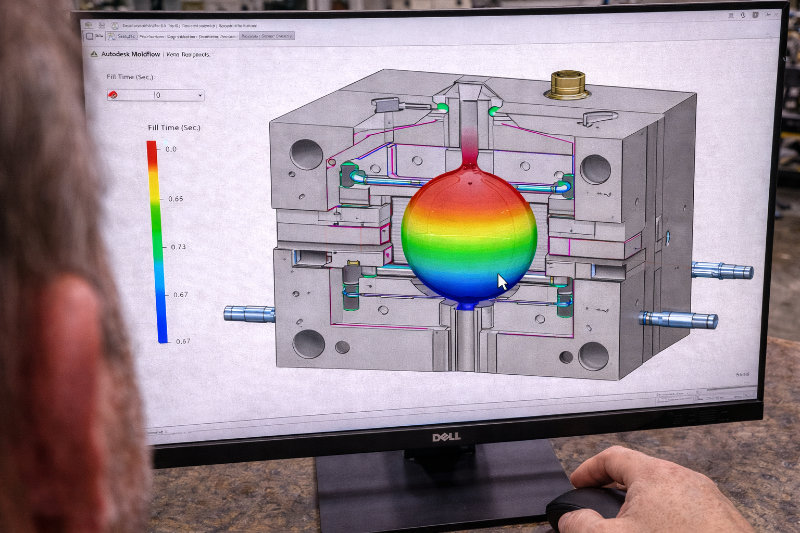
Pro Tip from JCAD-Inc. Owner Jason: Before you send your CAD file out for quoting, export it as STEP and run it through a free geometry checker. We regularly receive files with overlapping surfaces or orphaned geometry that the designer didn’t notice in their native software. Five minutes of cleanup on your end can save a full round of back-and-forth and knock a day or two off your lead time for producing the mold.
If your CAD file isn’t clean, the cost for your injection mold can go up fast. Mold makers charge more when they have to fix issues like missing draft angles or overlapping surfaces. A clean file with clear part design and no weird wall thickness changes / shortens the tooling lead time. That reduces the service cost.
Design readiness also affects mold material choice. Aluminum mold builds are cheaper when your part is DFM-ready and for low-volume use. But if your file needs work, it’s better to spend a bit more fixing the CAD file or recreating it. As that is much cheaper than remaking a mold.
| File Type | Typical Service Cost | Mold Price Impact |
|---|---|---|
| DFM-Ready STEP/IGES | Lower | Less rework needed |
| STL with errors | Higher | Slower CNC process |
| No draft or parting | Higher | Needs redesign |
| High wall variation | Higher | Risky mold failure |
A clean CAD file that aligns with terminology from ISO/ASTM 52900 boosts design‑quality consistency and helps avoid downstream mold making delays.
Tooling cost depends on what the mold is made of, how many cavities it has, and what machine it will be used in. Steel molds last longer, but they cost more to cut, polish, and maintain. Aluminum molds are cheaper for short runs. If you only need a few hundred parts, 3d printed molds can be much cheaper to produce. Injection molding machine size also changes the cost, since bigger parts need more clamping force and larger tools. Add more cavities, and you cut your cost per part, but you’ll also pay more up front for the mold, so you need to work out the price per unit based on that. Give us a call if you need help with that and we’ll walk you through the match.
Before your manufacturer ever switches on their injection molding machines, most of your costs are already locked in. That’s because poor part design means more machining, longer cycle times, and changes that delay production and greatly increase tooling costs. Mistakes here can be very costly as they mean re-making molds. Prototypes are a very good idea in this design phase. Mold making isn’t just cutting steel. It’s planning for heat flow, sprue position, and how the ejector pins push out the final part cleanly. The mold material and number of cavities also affect how fast you hit your required production volume. So it’s worth working with someone who understands engineering, not just someone who can “do CAD design”.
Design Mistakes That Raise Mold Cost:
Choosing the wrong plastic material for manufacturing adds cost fast. Some resins shrink more, need longer cooling times, or wear out the mold faster. That affects the molding machine settings and the surface texture of your part. Molds are expensive, so you want them to last for as long as possible.
Softer plastics might flash if your mold isn’t designed tightly enough. And certain plastic injection materials need higher temps, which limits your mold lifespan, especially with aluminum. If your design calls for precise tolerances or unusual material thickness, pick a resin that supports that without warping.
Material Cost Per kg (General Range):
Choice of material is a bit out of scope for this article. It takes a bit of explanation, so it’s best to get in touch with us for this and we’ll walk you through it.
Machine duration isn’t just about how long it runs, it’s about how efficient your mold architecture is. The longer the cooling, the slower the cycle, and the higher your total injection molding cost. A poorly vented cavity or a mold with bad thermal balance will slow the whole production process. Bigger molds need larger injection molding machines, which burn more energy per run. If your mold architecture doesn’t match the machine right, it adds hours across your production volume and raises the machine and labor cost associated with your production run.
What Impacts Machine Duration Most:
Our recommendation: Use aluminum tooling for any project where your run volume is going to be < 10,000 parts and your resin isn’t glass-filled or heavily abrasive. We’ve seen clients spend thousands more on steel molds for runs that never exceeded a few thousand units, where aluminum (or even vacuum casting) would have been sufficient and much cheaper. If your design is finalized and your material is standard, aluminum gets you to production faster and leaves budget for iteration if the part needs changes, although it’s best to prototype thoroughly before mold creation.
Aluminum molds make sense when you need low volumes, fast lead times, or easier CNC cutting. They’re softer than steel, which means less wear on cutting tools (cheaper overall for you) and faster mold making. But aluminum is not great for high-volume production or aggressive resins. If your part has tight tolerances or complex features, you’ll still need to factor in how long the mold will hold up. Most engineers choose aluminum when the design is finalized and part size is small to mid-range. We think it’s a smart choice if your production run is short and your material isn’t abrasive.
Aluminum Mold Pros:
3D printed molds are great for short prototype runs. They’re cheap to make, fast to modify, and don’t need steel or aluminum. If your part design is stable and doesn’t require high heat or pressure, this option can cut tooling cost a lot. It also gives you the ability to iterate designs without waiting weeks for machining. Just remember that these molds don’t last long and won’t handle high-volume production. For simple geometries, they’re perfect. For complex part shapes or surface texture demands, they may not work.
We usually treat 3D-printed molds as a prototyping / validation step, not a production shortcut. We’ve had clients try to push 3D printed tooling past 50-100 shot manufacturing runs and run into surface degradation and warping of tool dimensions. We use them to prove your geometry works, confirm fit with mating parts, and test gate placement. Then once we’ve confirmed the part is exactly how you want it, we move to aluminum or steel once you’re confident. That two-stage approach consistently saves more money than jumping straight to metal tooling on an unproven design.
One thing we’ve found consistently at JCAD International is that clients who provide a material specification alongside their CAD file get more accurate quotes on the first pass. When material is left unspecified, the mold designer has to assume worst-case shrinkage rates and thermal behavior, which inflates the quoted complexity. A one-line note saying “we’re running ABS” or “this will be glass-filled nylon” can shift the design approach enough to drop the service cost by 10–15%. If you’re not sure, ask, and we’ll help you through this part of the process.
Service cost jumps when your mold architecture needs extra labor, precision machining, or special materials. If your part has tight tolerances, multiple cavities, or needs a polished surface, expect to pay more.
Contract manufacturers often price based on design complexity and time spent fixing CAD issues. Some charge flat fees for design and fabrication, while others bill hourly. CNC machines with higher resolution or special cutters also cost more per job. Your total cost to manufacture depends heavily on how clean and ready your CAD files are.
The total injection molding cost includes more than just the tool. It’s mold cost, machine time, material cost, and cycle time multiplied by your production volume. When the design is finalized, we can lock in most of the cost elements. A bad call on parting line or wall thickness raises tooling cost, which is why we recommend prototyping first.
A poorly placed sprue slows the operation. And multi-cavity molds can save money long-term, but only if your molding machine can handle it. Costs include skilled labor, setup, and adjustments, especially for tight-tolerance parts in low volumes.
Some of the elements factored into quotes include:
JCAD-Inc. Production Volume Tip: If you’re unsure about your production volume, give us a range rather than a single number. There’s a meaningful cost difference between designing a mold for 500 parts versus 50,000, and knowing your production volume upfront lets us recommend the right mold material and cavity count without over-engineering the tool.
To get a clear mold price upfront, you need more than just a part file. Include your required production volume, material specs, and whether it’s for plastic injection molding or another manufacturing process. Some mold makers also ask for draft angles, part size, and surface finish needs. Without those, your quote will be missing key cost drivers. And if you’re asking for low volumes or using injection molding for the first time, say that. A good vendor will flag issues before quoting, not after.
Checklist Before Requesting a Mold Quote:
Most designs cost between $500 and $5,000, depending on part complexity, CAD file quality, and material choice. Simple designs with good draft angles and no undercuts fall on the low end. Complex multi-cavity tools with tight tolerances drive the price up.
Design cost changes based on how hard your part is to mold. Things like thin walls, poor surface finish specs, or bad ejector placement make it harder to build and operate the mold. More work = more cost. Good DFM practices lower the price.
Usually no. A mold is built to match a specific part’s geometry and size. If the parts are nearly identical, sometimes slight mods can be made, but most of the time, you’ll need a new mold for each unique part design.
Use a 3D printed mold, vacuum casting or a single-cavity aluminum tool. They’re fast, cheap, and good for short operations or early fit tests. If you’re not ready for full production, they give you a way to validate part design without spending thousands.
Not always. Some shops include mold design in the tooling cost, others charge it separately. Ask upfront. JCAD-Inc. provides a full breakdown so you know what’s design and what’s fabrication before you pay.

Jason Vander Griendt is a Mechanical Engineering Technician with years of experience working at major companies such as SNC Lavalin Inc, Hatch Ltd. Siemens and Gerdau Ameristeel. He is the CEO of JCAD – Inc., a company he started in 2006 after seeing a gap in the market for businesses who could assist clients through the entire product design and manufacturing process.
Jason has been featured in Forbes, has had his businesses analyzed and discussed in multiple start-up books, was a previous winner of the Notable8 Digital Innovator of the year award, and is a regular guest on business panels and podcasts. Email Jason at , or follow him on LinkedIn.

